Category Archives: community

Meet Colin: El Dorado Hills Jiu Jitsu’s Rising Star

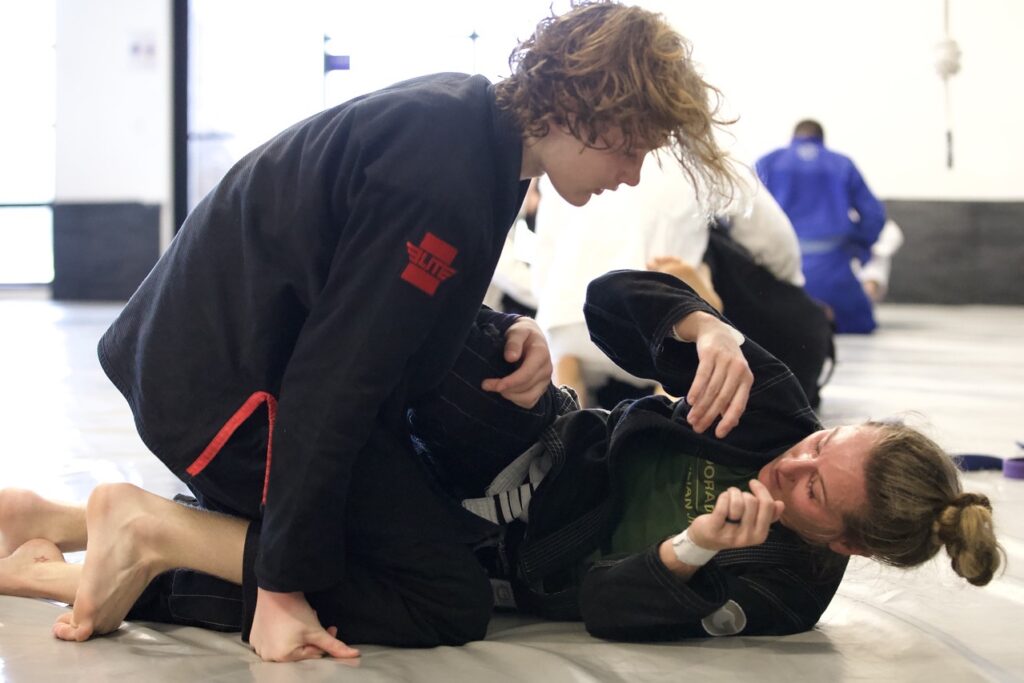
At El Dorado Hills Jiu Jitsu, we are proud to foster a community where dedication, discipline, and family values intertwine seamlessly. Today, we spotlight one of our standout members, Colin, a teenager who recently secured a championship at Jiu Jitsu World League (JJWL) and is proving himself as a rising competitor in the sport.

Colin’s Journey to Victory

Colin’s passion for Jiu Jitsu started at a young age. His journey has been marked by relentless training, an unyielding spirit, and the support of his family and coaches. His hard work paid off spectacularly at the recent JJWL event, where he secured two impressive submission victories, showcasing both his technical prowess and mental fortitude.

These wins are a testament to Colin’s growth as an athlete. He has consistently pushed his limits, learning and adapting with each training session. His ability to remain calm under pressure and execute his techniques with precision are qualities that have set him apart in competitions.

A Family Experience

Jiu Jitsu isn’t just Colin’s passion—it’s a family affair. The spirit of martial arts runs deep in the family, with all five members actively training at El Dorado Hills Jiu Jitsu. This collective commitment to the sport has not only strengthened their family bond but also created a unique support system that drives each of them to excel.

Whether it’s parents offering guidance, siblings sparring together, or cheering each other on during tournaments, the family’s involvement has been integral to Colin’s success. Their shared journey in Jiu Jitsu embodies the values of perseverance, respect, and teamwork that our gym strives to instill in all our members.
The Road Ahead

Colin’s recent victories at the JJWL are just the beginning. With his talent, determination, and the unwavering support of his family and coaches, the future looks incredibly bright. We are excited to see him continue to grow, compete, and inspire others within our community.

At El Dorado Hills Jiu Jitsu, we believe in nurturing talent and building champions both on and off the mats. Colin’s achievements are a proud reminder of what can be accomplished with hard work, dedication, and a strong support system. We look forward to celebrating more of his successes in the future and witnessing his journey unfold.
Join Us

Inspired by Colin’s story? Whether you’re a seasoned practitioner or a newcomer, El Dorado Hills Jiu Jitsu welcomes you to be part of our community. Our doors are open to individuals and families who are passionate about learning, growing, and supporting each other through the art of Jiu Jitsu.

Come train with us, and who knows? You might just be the next rising star in our dojo!


Stay tuned for more stories and updates from El Dorado Hills Jiu Jitsu. Together, we build champions on and off the mat.
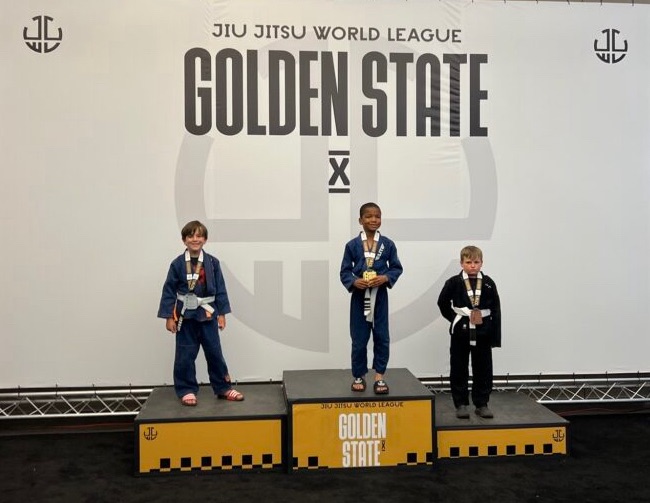
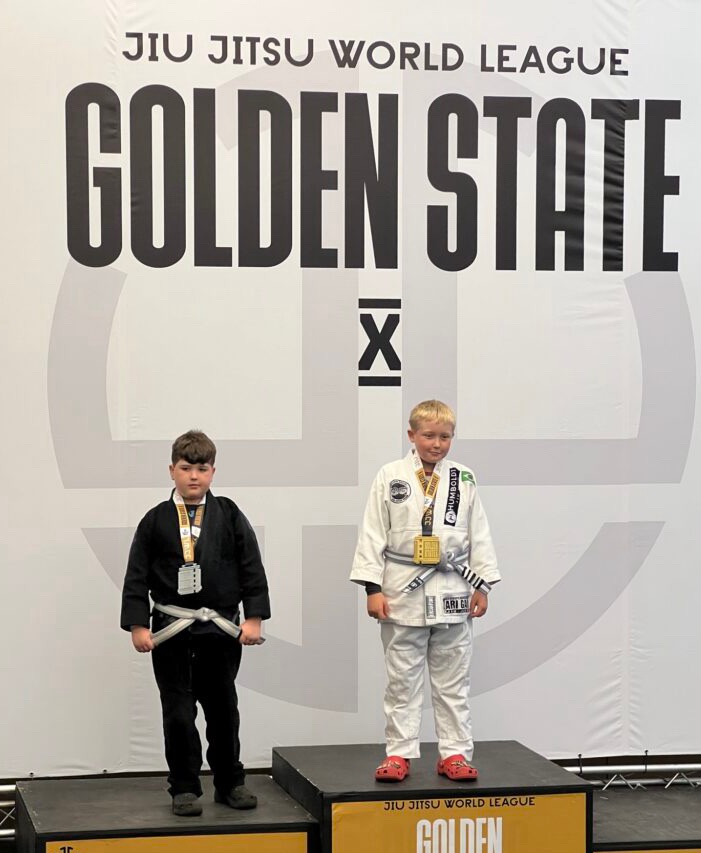
Triumph at the JJWL Stockton Golden State X Tournament: American Jiu Jitsu Syndicate’s Stellar Performance

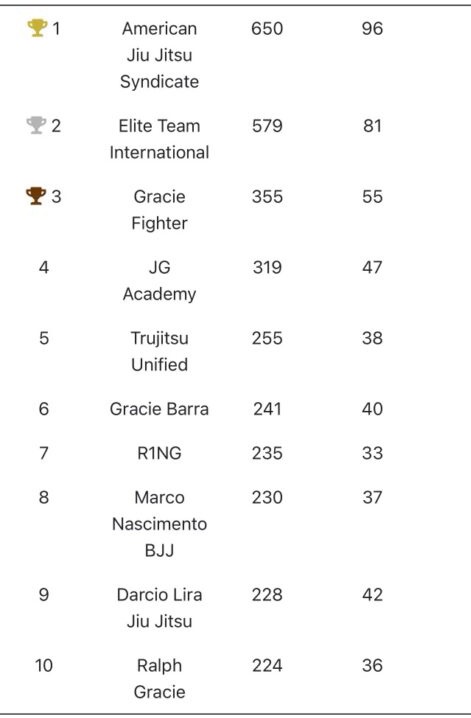
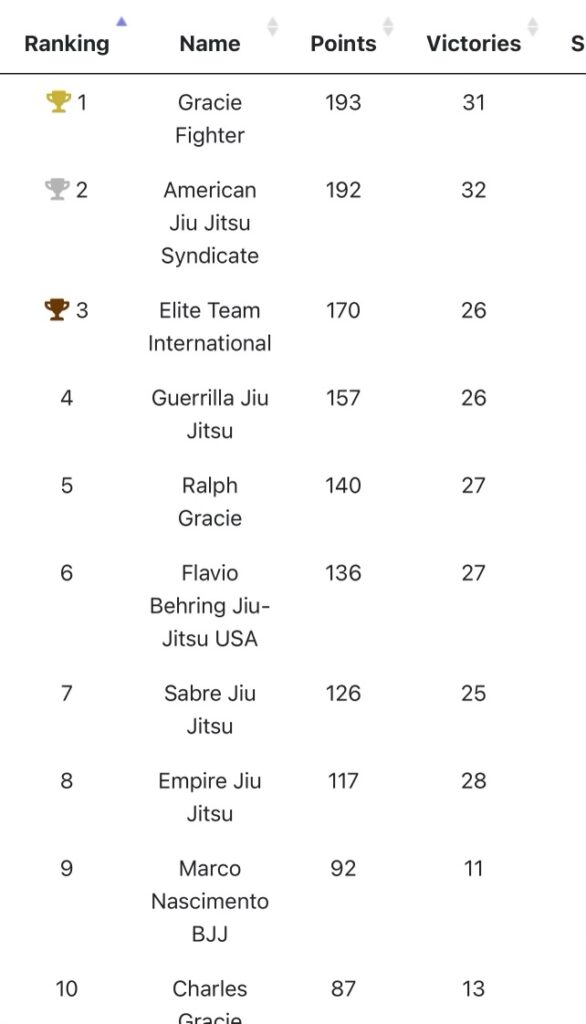
The JJWL Stockton Golden State X tournament was a spectacular event, filled with intense matches and remarkable displays of skill. Among the many teams that competed, the American Jiu Jitsu Syndicate (AJJ Syndicate) stood out for its exceptional performance, taking 1st place in the youth team points and 2nd place in the adult team points. El Dorado Hills Jiu Jitsu is a proud member of this new and rising association.

Youth Dominance: 1st Place Team Points

The youth competitors from AJJ Syndicate showcased their prowess and determination throughout the tournament. Their journey to the top was marked by a series of impressive victories, each match reflecting the rigorous training and strategic preparation they underwent. The collective effort and unwavering spirit of the young athletes led AJJS to secure 1st place in the youth team points, a testament to the future stars being nurtured within the syndicate.

Adult Excellence: 2nd Place Team Points

The adult competitors of AJJ Syndicate also put forth an outstanding performance, earning them 2nd place in the team points category. The competition was fierce, with skilled athletes from various teams vying for the top spots. However, the determination and expertise of the AJJ Syndicate members shone through, earning them numerous podium finishes and critical points.

The Spirit of Teamwork and Dedication

The success of the American Jiu Jitsu Syndicate at the JJWL Stockton Golden State X tournament is a reflection of the association’s commitment to excellence and the strong sense of community within its ranks. El Dorado Hills Jiu Jitsu, as part of AJJ Syndicate, contributed to this remarkable achievement. The camaraderie among team members, the support from coaches, and the encouragement from families and fans all played a significant role in this triumph.

Looking Forward

As AJJ Syndicate celebrates its victories, the focus now shifts to future tournaments and continued growth. The achievements at the JJWL Stockton Golden State X tournament serve as motivation for the entire syndicate to keep striving for excellence. With the foundation of success firmly in place, AJJ Syndicate is poised to achieve even greater heights in the world of Jiu Jitsu.

Youth Team Results
Adult Team Results

Mat Chat: Keeping our community clean

Hey everyone! Let’s talk about why it’s important to keep our community clean, focusing on responsibility, community pride, and respect.

  1. Responsibility: Keeping our community clean is our job. When we throw away our trash properly and pick up litter, we show we can take care of our home.
  2. Pride: A clean neighborhood makes us feel proud. When everything looks nice, we can be happy and proud of where we live and play.
  3. Respect: Cleaning up our area shows respect for our friends, family, and neighbors, and ourselves. It shows that we care about each other and our environment.

By being responsible, taking pride, and showing respect, we can make our community a wonderful place for everyone!


A mat chat is an essential component of martial arts and sports training, serving as a deliberate moment where instructors and students gather to discuss important lessons that extend beyond physical skills. At El Dorado Hills Jiu Jitsu we value this skill and make moments to coach these skills with intention. The importance of a mat chat in reinforcing life skills through training on the mat and into life off the mat can be summarized in several key points:

  1. Values and Ethics: Mat chats provide an opportunity to instill core values such as respect, discipline, integrity, and perseverance. Discussing these principles helps students understand their importance not only in training but in everyday life.
  2. Mental Resilience: The mat chat is a platform to teach mental toughness and resilience. Instructors can share personal stories and practical advice on how to overcome challenges, deal with failure, and maintain a positive attitude, skills that are crucial both on and off the mat.
  3. Goal Setting and Achievement: Conversations during mat chats often focus on setting and achieving goals. This practice teaches students the importance of setting clear, attainable objectives and the steps needed to reach them, a valuable skill for personal and professional development.
  4. Conflict Resolution and Social Skills: Mat chats can address topics such as effective communication, teamwork, and conflict resolution. These discussions help students develop social skills that are essential for healthy relationships and community involvement.
  5. Health and Wellness: Instructors can use mat chats to emphasize the importance of physical fitness, nutrition, and overall wellness. This holistic approach encourages students to adopt healthy lifestyles that benefit their long-term well-being.
  6. Self-Reflection and Growth: By encouraging self-reflection, mat chats help students assess their progress, recognize their strengths and weaknesses, and develop a growth mindset. This reflective practice is key to continuous improvement in all areas of life.
  7. Community and Belonging: Mat chats foster a sense of community and belonging among students. Sharing experiences and insights builds camaraderie and mutual support, reinforcing the idea that they are part of a larger, supportive network.

In essence, mat chats are a critical educational tool that bridges the gap between physical training and personal development. They ensure that the lessons learned on the mat are applied to everyday life, helping students grow into well-rounded individuals who can navigate the complexities of life with confidence and resilience. We believe at El Dorado Hills Jiu Jitsu that”Getting stronger together” isn’t just limited to what we do on the mat but also off the mat.

Discover the Power of Jiu-Jitsu: Your Journey Begins with a Trial at El Dorado Hills Jiu-Jitsu

Are you curious about the art of Brazilian Jiu-Jitsu (BJJ)? Whether you’re looking to enhance your fitness, learn self-defense, or challenge yourself with a new hobby, starting your journey with a trial class at El Dorado Hills Jiu-Jitsu is the perfect way to dive in.

Why Try Jiu-Jitsu?

1. Full-Body Workout: BJJ offers a comprehensive workout that combines strength, cardio, and flexibility. Every class engages multiple muscle groups, improving your overall fitness and physical health.

2. Practical Self-Defense: Jiu-Jitsu is known for its effectiveness in real-life self-defense scenarios. Learning to control and submit an opponent without relying on sheer strength makes it accessible and practical for everyone.

3. Mental Toughness: The mental challenges of BJJ are as significant as the physical ones. Problem-solving, strategy, and resilience are key components, helping you develop mental toughness and confidence.

4. Community: Joining a Jiu-Jitsu academy means becoming part of a supportive community. You’ll train with like-minded individuals who encourage and motivate each other.

What to Expect in Your Trial Class

At El Dorado Hills Jiu-Jitsu, our trial class is designed to give you a taste of what Jiu-Jitsu is all about. Here’s what you can expect:

1. Warm-Up: We begin with a dynamic warm-up to prepare your body for training. This includes light jogging, stretching, and basic movements to get your blood flowing.

2. Introduction to Fundamentals: Our instructors will introduce you to fundamental techniques. This might include basic positions like the guard, mount, and side control, as well as simple escapes and submissions.

3. Drilling: You’ll practice these techniques with a partner. Drilling helps you understand the mechanics of each move and develop muscle memory.

4. Light Sparring (Optional): Depending on your comfort level, you might have the opportunity to engage in light sparring or “rolling.” This is a chance to apply what you’ve learned in a controlled, safe environment.

5. Cool Down: The class ends with a cool-down period to help your muscles recover. This includes stretching and breathing exercises.

Starting with the Fundamentals

Mastering the fundamentals is crucial in Jiu-Jitsu. Here are some core principles you’ll focus on:

1. Position Over Submission: Understanding and maintaining good positions is key. Before attempting submissions, you need to control your opponent effectively.

2. Leverage and Technique: Jiu-Jitsu is often described as the “gentle art” because it relies on leverage and technique rather than brute strength. This makes it accessible to practitioners of all sizes and strengths.

3. Movement and Flow: Learning to move efficiently on the ground is essential. You’ll practice transitioning between positions smoothly and maintaining balance and control.

4. Patience and Progress: Progress in Jiu-Jitsu takes time and patience. Celebrate small victories along the way and stay committed to continuous improvement.

Ready to Start Your Journey?

El Dorado Hills Jiu-Jitsu welcomes everyone, from complete beginners to seasoned martial artists. Our experienced instructors are dedicated to providing a safe, supportive, and challenging environment for all students.

Sign up for your trial class today and take the first step on your Jiu-Jitsu journey. Experience the physical, mental, and social benefits of this incredible martial art. We look forward to training with you and helping you discover the power of Jiu-Jitsu!


About El Dorado Hills Jiu-Jitsu:
Located in of El Dorado Hills, CA our academy offers top-notch Jiu-Jitsu training for all ages and skill levels. Residents from Folsom, WDH, Cameron park, Shingle springs, Placerville, and the greater El Dorado County attend our academy. With a focus on technique, discipline, and community, we strive to empower our students both on and off the mat.

For more information, visit our website or contact us at edhbjj@gmail.com

The Journey of Self-Improvement: Evaluating Your Skills and Progression in Jiujitsu

In the world of Brazilian Jiujitsu (BJJ), it’s easy to fall into the trap of comparing your skills to those of your peers. With each roll, every sparring session, and every competition, we often measure our success by how well we perform against others. However, true mastery and fulfillment in Jiujitsu come from a different approach: evaluating your skills and progression over time, rather than through the lens of comparison with another practitioner.

The Pitfalls of Comparison

Comparison can be a double-edged sword. On one hand, it can push you to train harder and strive for improvement. On the other hand, it can also lead to frustration, self-doubt, and even burnout. Here’s why relying too heavily on comparison can be detrimental:

  1. Varied Journeys: Everyone’s path in Jiujitsu is unique. Factors like natural talent, physical attributes, training frequency, and personal circumstances all influence progression. Comparing yourself to someone who may have started at a different time or under different conditions can skew your perception of your own growth.
  2. Short-Term vs. Long-Term Progress: BJJ is a marathon, not a sprint. Short-term comparisons may overlook the gradual and significant improvements you’ve made over months and years. Progress can be slow and incremental, making it crucial to keep the long-term perspective in mind.
  3. Psychological Toll: Constantly measuring yourself against others can create unnecessary mental stress. This stress can affect your enjoyment of the sport and hinder your overall development. Jiujitsu should be a source of joy and personal growth, not a constant source of anxiety.

The Benefits of Self-Evaluation

Focusing on your personal progression over time offers numerous advantages:

  1. Personal Growth: By evaluating your skills based on your previous performance, you can clearly see your own improvement. This personal growth is more satisfying and sustainable than trying to match someone else’s achievements.
  2. Goal Setting: Self-evaluation helps you set realistic, personalized goals. Whether it’s mastering a specific technique, improving your endurance, or simply becoming more confident on the mat, setting and achieving your own goals fosters a sense of accomplishment.
  3. Resilience and Motivation: Tracking your progress over time can keep you motivated, especially during plateaus. Recognizing how far you’ve come can reignite your passion and commitment to the sport, helping you push through challenging times.
  4. Positive Mindset: Cultivating a growth mindset, where you focus on learning and improvement rather than winning or losing, creates a more positive training environment. This mindset encourages experimentation, learning from mistakes, and ultimately becoming a more well-rounded practitioner.

How to Evaluate Your Progress

To illustrate how you can measure progress over time in an individual sport, let’s look at examples from swimming and running.

Swimming:

  1. Time Trials: Record your times for various distances. Over time, you’ll be able to see improvements in your speed.
  2. Technique Analysis: Video your strokes and analyze your form. Small adjustments can lead to significant performance gains.
  3. Endurance Tests: Measure how long you can maintain a specific pace. Increased endurance is a clear sign of progress.

Running:

  1. Pace Tracking: Use a GPS watch or smartphone app to track your pace per mile. Over weeks and months, you should see your average pace improve.
  2. Distance Goals: Set incremental distance goals. If you started running 5Ks, challenge yourself with a 10K or a half-marathon.
  3. Consistency Metrics: Track how frequently you run and for how long. Increasing the consistency and duration of your runs can indicate better fitness and discipline.

Jiujitsu can adopt similar metrics to analyze personal progress:

  1. Keep a Training Journal: Document your training sessions, techniques learned, and personal reflections. Over time, you’ll be able to look back and see the progress you’ve made.
  2. Record and Review: Video your rolls and sparring sessions. Watching these videos can provide insights into areas where you’ve improved and aspects that need more work.
  3. Set Milestones: Establish short-term and long-term goals. Celebrate small victories along the way, as these are stepping stones to larger achievements.
  4. Seek Feedback: Regularly ask your coaches and training partners for feedback. Constructive criticism from others can help you see your progress from a different perspective and identify areas for improvement.
  5. Self-Reflection: Take time to reflect on your BJJ journey. What have you learned? How have you grown, both on and off the mat? Self-reflection is a powerful tool for personal development.

In Brazilian Jiujitsu, the true measure of success is not how you compare to others, but how you evolve over time. Embrace your unique journey, focus on your own progression, and celebrate your personal achievements. By doing so, you’ll find greater fulfillment, resilience, and joy in the gentle art of Jiujitsu. Remember, the only person you need to be better than is the person you were yesterday.

The Blue Angels: A Skyward Journey of Discipline and Precision – Parallels we can learn and apply to training at EDH Jiu-Jitsu

In 2024, “The Blue Angels” movie soared into theaters, captivating audiences with the breathtaking maneuvers and disciplined teamwork of the U.S. Navy’s elite flight demonstration squadron. Directed by the visionary filmmaker Michael Bay, this film is a high-octane tribute to the skill, dedication, and precision that define the Blue Angels. But beyond the roaring engines and stunning aerobatics lies a deeper narrative that resonates profoundly with the principles of jiu-jitsu.

Precision and Timing: The Core of Excellence

In “The Blue Angels,” we witness pilots executing maneuvers with pinpoint accuracy. Every roll, loop, and formation demands exact timing and flawless coordination. Similarly, in jiu-jitsu, practitioners strive for perfect timing and precise technique. Whether executing a sweep, a guard pass, or a submission, the effectiveness of a jiu-jitsu move often hinges on millisecond-perfect execution. Just as a slight error in the sky can lead to disaster, a small mistake on the mat can mean the difference between success and failure.

Discipline and Repetition: The Path to Mastery

Both the Blue Angels and jiu-jitsu practitioners understand that mastery comes through relentless practice and unwavering discipline. The pilots train rigorously, flying countless hours to ensure they perform as one cohesive unit. This mirrors the jiu-jitsu journey, where repetition and consistent training are crucial. Techniques must be drilled repeatedly to become second nature, much like the pilots’ routines, which must be performed instinctively even under immense pressure.

Meticulous preparation

This video shows all the different methods of preparation done to successfully coordinate for a performance. It’s inspirational!

Teamwork and Trust: The Foundation of Success

The Blue Angels exemplify the importance of teamwork and trust. Each pilot relies on the others to maintain formation and execute complex maneuvers safely. In jiu-jitsu, training partners play a vital role in one’s development. Rolling with different partners exposes practitioners to various styles and techniques, fostering growth and adaptability. Trust is essential; knowing your partner will respect the tap and provide constructive feedback is foundational to a safe and effective training environment.

Mental Toughness and Adaptability

“The Blue Angels” highlights the mental toughness required to remain calm and focused in high-stakes situations. Pilots must adapt quickly to changing conditions and make split-second decisions. Jiu-jitsu also demands mental fortitude. Practitioners face the challenge of staying composed while trapped in difficult positions and must think several moves ahead to outmaneuver their opponents. The ability to adapt and remain calm under pressure is a shared trait between these elite pilots and dedicated jiu-jitsu practitioners.

The Pursuit of Excellence

Ultimately, “The Blue Angels” movie is a celebration of the pursuit of excellence. The pilots’ dedication to their craft is inspiring, reflecting a commitment to continual improvement and a relentless drive to be the best. This pursuit mirrors the ethos of jiu-jitsu, where practitioners constantly seek to refine their skills, expand their knowledge, and push their limits. Both the Blue Angels and jiu-jitsu enthusiasts understand that the journey to mastery is ongoing and that true excellence is a lifelong pursuit.

“The Blue Angels” is more than just a thrilling aviation movie; it is a testament to the virtues of discipline, precision, teamwork, and mental toughness. These same principles are the bedrock of jiu-jitsu, making the film not only a visual spectacle but also an inspiration for martial artists. As we marvel at the Blue Angels’ aerial prowess, we can draw valuable lessons for our own journeys on the mat, embracing the spirit of excellence that drives both aviators and jiu-jitsu practitioners alike.

So, the next time you watch “The Blue Angels” or step onto the mat, remember that the sky is not the limit—it’s just the beginning.

Embracing the Gentle Art: How Learning Jiu-Jitsu at EDHBJJ Cultivates Leadership Skills

The journey of learning Brazilian Jiu-Jitsu (BJJ) is often likened to a transformative path, one that builds not just physical prowess but also mental and emotional strength. As practitioners navigate the complexities of this martial art, they inadvertently develop key leadership skills that translate seamlessly into everyday life. Here’s how we foster leadership qualities at El Dorado Hills Jiu Jitsu.

  1. Resilience and Perseverance

In BJJ, every practitioner experiences moments of defeat and frustration. Whether it’s being caught in a chokehold or struggling to master a technique, the mat humbles everyone. This resilience to keep going despite setbacks is a cornerstone of effective leadership. Leaders often face challenges that test their patience and resolve. Jiu-Jitsu teaches them to persevere, adapt, and eventually overcome obstacles, instilling a mindset that views failure as a stepping stone rather than a roadblock.

  1. Humility and Confidence

BJJ is a unique blend of humility and confidence. On the mat, there is always someone better, and this reality keeps practitioners grounded. This humility is critical for leaders who need to stay open to feedback and continuous improvement. At the same time, successfully executing techniques and progressing through ranks builds confidence. Leaders must balance humility with the confidence to make decisions and inspire others, a balance finely tuned through Jiu-Jitsu training.

  1. Problem-Solving Skills

Each roll (sparring session) in Jiu-Jitsu is a dynamic puzzle. Practitioners must constantly assess their position, anticipate their opponent’s moves, and react accordingly. This environment sharpens analytical and strategic thinking. Leaders benefit from this enhanced problem-solving ability, enabling them to navigate complex situations, devise strategies, and make informed decisions under pressure.

  1. Communication and Interpersonal Skills

Effective communication is vital in BJJ. Whether asking for advice, giving feedback, or coordinating with a training partner, clear and respectful communication is a must. Leaders need these skills to build strong teams, resolve conflicts, and foster a positive work environment. The respectful culture of Jiu-Jitsu, where everyone learns from each other, directly translates to a collaborative and inclusive leadership style.

  1. Empathy and Emotional Intelligence

Jiu-Jitsu cultivates empathy as practitioners often experience both dominant and vulnerable positions. Understanding and managing one’s emotions and empathizing with others’ perspectives are critical aspects of emotional intelligence. Leaders with high emotional intelligence can build stronger relationships, manage stress, and create a supportive atmosphere for their teams.

  1. Discipline and Time Management

Consistency and discipline are essential to progress in Jiu-Jitsu. Regular training requires time management and prioritization, skills that are equally important in leadership. Leaders must balance various responsibilities, set goals, and maintain focus on long-term objectives. The disciplined approach learned through Jiu-Jitsu helps leaders stay organized and productive.

  1. Building a Growth Mindset

Jiu-Jitsu is a never-ending journey of learning and self-improvement. Practitioners embrace the process of continuous learning, understanding that mastery is a lifelong pursuit. This growth mindset is invaluable for leaders who need to adapt to changing circumstances and encourage innovation within their teams. A leader who embodies a growth mindset inspires others to embrace challenges and view setbacks as opportunities for growth.

Learning Jiu-Jitsu at EDHBJJ is much more than acquiring self-defense techniques; it’s a holistic practice that shapes character and cultivates leadership skills. From resilience to empathy, the principles and experiences gained on the mat foster qualities that make effective and inspiring leaders. As you tie your belt and step onto the mat, remember that each roll is not just a test of physical skill but a step towards becoming a better leader.

Embracing the Journey: The Art of Enjoying the Process

In a world that often glorifies the destination, it’s easy to fall into the trap of fixating on end results and overlooking the beauty of the journey. Whether it’s striving for career success, personal goals, or even just getting through the day-to-day grind, we can become so focused on reaching our desired outcomes that we forget to savor the process along the way.

But what if we shifted our perspective and learned to embrace the journey, finding joy and fulfillment in each step we take? What if we acknowledged that life is not just about the destination, but about the experiences, lessons, and growth that occur along the way?

The truth is, the journey is where the magic happens. It’s where we discover our strengths, confront our fears, and forge meaningful connections with others. It’s where we learn, evolve, and become the best versions of ourselves. And yet, all too often, we rush through it in pursuit of some elusive end goal, only to find that once we reach it, we’re left feeling empty and unsatisfied.

So how can we learn to enjoy the process and embrace the journey? Here are a few tips to help shift your focus from the destination to the path that leads you there:

  1. Practice mindfulness: Take time to be fully present in the moment, appreciating the sights, sounds, and sensations around you. Whether you’re going for a walk in nature, sipping your morning coffee, or working on a project, immerse yourself fully in the experience without judgment or distraction.
  2. Set intentions, not expectations: Instead of rigidly fixating on specific outcomes, focus on setting intentions for how you want to show up and engage with the world. This allows for greater flexibility and openness to whatever unfolds, fostering a sense of curiosity and wonder along the way.
  3. Celebrate small victories: Acknowledge and celebrate the progress you make, no matter how small or incremental it may seem. Each step forward is a testament to your efforts and dedication, and deserves to be recognized and appreciated.
  4. Cultivate gratitude: Take time each day to reflect on the things you’re grateful for, whether it’s the support of loved ones, the beauty of nature, or the opportunities that come your way. Cultivating an attitude of gratitude can help shift your perspective from scarcity to abundance, allowing you to see the blessings that surround you.
  5. Find joy in the process: Seek out activities and pursuits that bring you joy and fulfillment, regardless of the outcome. Whether it’s pursuing a creative passion, spending time with loved ones, or engaging in acts of service, prioritize activities that nourish your soul and bring you happiness.

Ultimately, life is a journey, not a destination. By learning to embrace the process and find joy in the journey, we can cultivate a deeper sense of fulfillment, meaning, and purpose in our lives. So take a moment to pause, breathe, and appreciate the journey you’re on. After all, it’s not just about where you’re going, but how you get there that truly matters.

– Coach Danny

Embracing the Journey: The Art of Enjoying the Process

In a world that often glorifies the destination, it’s easy to fall into the trap of fixating on end results and overlooking the beauty of the journey. Whether it’s striving for career success, personal goals, or even just getting through the day-to-day grind, we can become so focused on reaching our desired outcomes that we forget to savor the process along the way.

But what if we shifted our perspective and learned to embrace the journey, finding joy and fulfillment in each step we take? What if we acknowledged that life is not just about the destination, but about the experiences, lessons, and growth that occur along the way?

The truth is, the journey is where the magic happens. It’s where we discover our strengths, confront our fears, and forge meaningful connections with others. It’s where we learn, evolve, and become the best versions of ourselves. And yet, all too often, we rush through it in pursuit of some elusive end goal, only to find that once we reach it, we’re left feeling empty and unsatisfied.

So how can we learn to enjoy the process and embrace the journey? Here are a few tips to help shift your focus from the destination to the path that leads you there:

  1. Practice mindfulness: Take time to be fully present in the moment, appreciating the sights, sounds, and sensations around you. Whether you’re going for a walk in nature, sipping your morning coffee, or working on a project, immerse yourself fully in the experience without judgment or distraction.
  2. Set intentions, not expectations: Instead of rigidly fixating on specific outcomes, focus on setting intentions for how you want to show up and engage with the world. This allows for greater flexibility and openness to whatever unfolds, fostering a sense of curiosity and wonder along the way.
  3. Celebrate small victories: Acknowledge and celebrate the progress you make, no matter how small or incremental it may seem. Each step forward is a testament to your efforts and dedication, and deserves to be recognized and appreciated.
  4. Cultivate gratitude: Take time each day to reflect on the things you’re grateful for, whether it’s the support of loved ones, the beauty of nature, or the opportunities that come your way. Cultivating an attitude of gratitude can help shift your perspective from scarcity to abundance, allowing you to see the blessings that surround you.
  5. Find joy in the process: Seek out activities and pursuits that bring you joy and fulfillment, regardless of the outcome. Whether it’s pursuing a creative passion, spending time with loved ones, or engaging in acts of service, prioritize activities that nourish your soul and bring you happiness.

Ultimately, life is a journey, not a destination. By learning to embrace the process and find joy in the journey, we can cultivate a deeper sense of fulfillment, meaning, and purpose in our lives. So take a moment to pause, breathe, and appreciate the journey you’re on. After all, it’s not just about where you’re going, but how you get there that truly matters.

– Coach Danny

The Importance and Difficulty of Mastering Closed Guard in Brazilian Jiu-Jitsu | EDH BJJ

In Brazilian Jiu-Jitsu (BJJ), the closed guard is a fundamental and indispensable position that forms the core of many practitioners’ skill sets. This position, where the practitioner on the bottom wraps their legs around their opponent’s waist, serves as a powerful tool for control, defense, and offense. Its significance in BJJ cannot be overstated, as it provides a strong foundation for understanding the art’s mechanics and strategies. However, mastering the closed guard is no easy task. It requires a deep understanding of technical intricacies, adaptability to different opponents, physical conditioning, mental acuity, and a commitment to continuous learning. Despite these challenges, the closed guard remains a vital element of a successful BJJ game, offering both strategic depth and versatility.

Importance of Closed Guard

  1. Fundamental Position:
    The closed guard, also known as full guard, is one of the most fundamental and widely taught positions in Brazilian Jiu-Jitsu (BJJ). It forms the bedrock of many practitioners’ games, particularly for beginners. Mastering the closed guard offers a strong foundation for understanding more complex positions and transitions.
  2. Control and Defense:
    From the closed guard, a practitioner can effectively control their opponent, limiting their movement and offensive options. This position provides a defensive stronghold, preventing the opponent from passing guard and advancing to more dominant positions. The practitioner can use their legs and hips to keep the opponent close, reducing the risk of strikes in self-defense scenarios or MMA.
  3. Offensive Opportunities:
    The closed guard is rich with offensive possibilities. It allows for a wide range of submissions, such as arm bars, triangles, and omoplatas, as well as sweeps that can reverse the position. The versatility of the closed guard enables practitioners to launch attacks while maintaining a secure position.
  4. Energy Efficiency:
    Unlike some other positions that might require constant adjustment and high energy expenditure, the closed guard can be maintained with relatively low energy, allowing practitioners to conserve their stamina. This makes it a valuable position, particularly in long matches or when facing a more aggressive opponent.

Difficulty of Mastering Closed Guard

  1. Technical Complexity:
    While the closed guard might seem straightforward, mastering it requires a deep understanding of mechanics, leverage, and timing. Effective use of the guard involves precise control of the opponent’s posture and balance, which can take years to perfect. Each technique, from sweeps to submissions, requires intricate details and timing to execute correctly.
  2. Adaptability to Opponents:
    Different opponents will react differently to the closed guard, necessitating the ability to adapt dynamically. Practitioners must learn to anticipate and counter a variety of defensive maneuvers and guard passes. This adaptability only comes with extensive practice and experience against diverse training partners.
  3. Physical Demands:
    While the closed guard can be energy efficient, maintaining it and executing techniques effectively still demands significant core strength and flexibility. Developing the physical attributes needed to excel in the closed guard—such as hip mobility and leg dexterity—can be challenging and requires dedicated conditioning.
  4. Mental Focus:
    Effective use of the closed guard demands high levels of mental focus and strategic thinking. Practitioners must constantly monitor their opponent’s movements, anticipate attacks, and plan their own offensive and defensive actions. This mental aspect adds another layer of difficulty, as split-second decisions can mean the difference between maintaining control and losing the position.
  5. Continuous Evolution:
    The landscape of BJJ is ever-evolving, with new techniques and counters being developed continuously. Staying ahead in the closed guard game requires ongoing learning and adaptation. Practitioners must stay updated with the latest developments and incorporate them into their practice, which can be a lifelong endeavor.

In summary, the closed guard is a cornerstone of Brazilian Jiu-Jitsu that offers immense strategic value both defensively and offensively. However, mastering it is no small feat due to its technical complexity, the need for adaptability, physical demands, mental focus, and the continuous evolution of techniques. Despite these challenges, the rewards of a proficient closed guard make the effort worthwhile for any dedicated practitioner.

Come try jiujitsu with us at El Dorado Hills Jiu Jitsu. The academy that pioneered jiujitsu in the hills in 2009. EDHBJJ is a martial arts academy for the entire family. Send us an email or give us a call to get started with a trial lesson.