Tag Archives: martial arts

The Blue Angels: A Skyward Journey of Discipline and Precision – Parallels we can learn and apply to training at EDH Jiu-Jitsu

In 2024, “The Blue Angels” movie soared into theaters, captivating audiences with the breathtaking maneuvers and disciplined teamwork of the U.S. Navy’s elite flight demonstration squadron. Directed by the visionary filmmaker Michael Bay, this film is a high-octane tribute to the skill, dedication, and precision that define the Blue Angels. But beyond the roaring engines and stunning aerobatics lies a deeper narrative that resonates profoundly with the principles of jiu-jitsu.

Precision and Timing: The Core of Excellence

In “The Blue Angels,” we witness pilots executing maneuvers with pinpoint accuracy. Every roll, loop, and formation demands exact timing and flawless coordination. Similarly, in jiu-jitsu, practitioners strive for perfect timing and precise technique. Whether executing a sweep, a guard pass, or a submission, the effectiveness of a jiu-jitsu move often hinges on millisecond-perfect execution. Just as a slight error in the sky can lead to disaster, a small mistake on the mat can mean the difference between success and failure.

Discipline and Repetition: The Path to Mastery

Both the Blue Angels and jiu-jitsu practitioners understand that mastery comes through relentless practice and unwavering discipline. The pilots train rigorously, flying countless hours to ensure they perform as one cohesive unit. This mirrors the jiu-jitsu journey, where repetition and consistent training are crucial. Techniques must be drilled repeatedly to become second nature, much like the pilots’ routines, which must be performed instinctively even under immense pressure.

Meticulous preparation

This video shows all the different methods of preparation done to successfully coordinate for a performance. It’s inspirational!

Teamwork and Trust: The Foundation of Success

The Blue Angels exemplify the importance of teamwork and trust. Each pilot relies on the others to maintain formation and execute complex maneuvers safely. In jiu-jitsu, training partners play a vital role in one’s development. Rolling with different partners exposes practitioners to various styles and techniques, fostering growth and adaptability. Trust is essential; knowing your partner will respect the tap and provide constructive feedback is foundational to a safe and effective training environment.

Mental Toughness and Adaptability

“The Blue Angels” highlights the mental toughness required to remain calm and focused in high-stakes situations. Pilots must adapt quickly to changing conditions and make split-second decisions. Jiu-jitsu also demands mental fortitude. Practitioners face the challenge of staying composed while trapped in difficult positions and must think several moves ahead to outmaneuver their opponents. The ability to adapt and remain calm under pressure is a shared trait between these elite pilots and dedicated jiu-jitsu practitioners.

The Pursuit of Excellence

Ultimately, “The Blue Angels” movie is a celebration of the pursuit of excellence. The pilots’ dedication to their craft is inspiring, reflecting a commitment to continual improvement and a relentless drive to be the best. This pursuit mirrors the ethos of jiu-jitsu, where practitioners constantly seek to refine their skills, expand their knowledge, and push their limits. Both the Blue Angels and jiu-jitsu enthusiasts understand that the journey to mastery is ongoing and that true excellence is a lifelong pursuit.

“The Blue Angels” is more than just a thrilling aviation movie; it is a testament to the virtues of discipline, precision, teamwork, and mental toughness. These same principles are the bedrock of jiu-jitsu, making the film not only a visual spectacle but also an inspiration for martial artists. As we marvel at the Blue Angels’ aerial prowess, we can draw valuable lessons for our own journeys on the mat, embracing the spirit of excellence that drives both aviators and jiu-jitsu practitioners alike.

So, the next time you watch “The Blue Angels” or step onto the mat, remember that the sky is not the limit—it’s just the beginning.
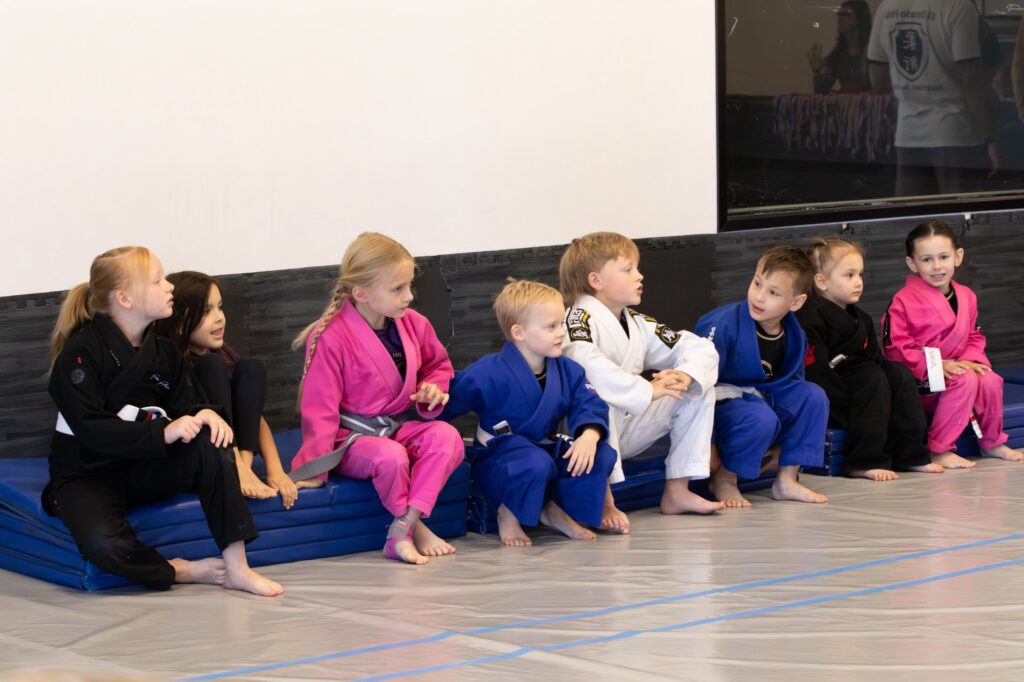
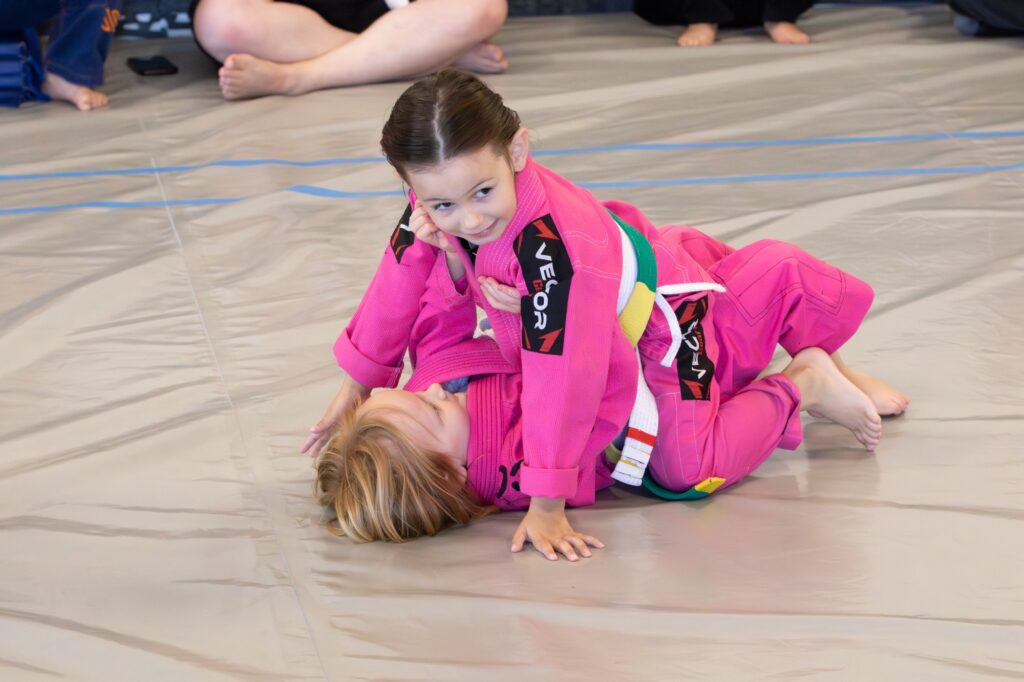
Embracing the Gentle Art: How Learning Jiu-Jitsu at EDHBJJ Cultivates Leadership Skills

The journey of learning Brazilian Jiu-Jitsu (BJJ) is often likened to a transformative path, one that builds not just physical prowess but also mental and emotional strength. As practitioners navigate the complexities of this martial art, they inadvertently develop key leadership skills that translate seamlessly into everyday life. Here’s how we foster leadership qualities at El Dorado Hills Jiu Jitsu.

  1. Resilience and Perseverance

In BJJ, every practitioner experiences moments of defeat and frustration. Whether it’s being caught in a chokehold or struggling to master a technique, the mat humbles everyone. This resilience to keep going despite setbacks is a cornerstone of effective leadership. Leaders often face challenges that test their patience and resolve. Jiu-Jitsu teaches them to persevere, adapt, and eventually overcome obstacles, instilling a mindset that views failure as a stepping stone rather than a roadblock.

  1. Humility and Confidence

BJJ is a unique blend of humility and confidence. On the mat, there is always someone better, and this reality keeps practitioners grounded. This humility is critical for leaders who need to stay open to feedback and continuous improvement. At the same time, successfully executing techniques and progressing through ranks builds confidence. Leaders must balance humility with the confidence to make decisions and inspire others, a balance finely tuned through Jiu-Jitsu training.

  1. Problem-Solving Skills

Each roll (sparring session) in Jiu-Jitsu is a dynamic puzzle. Practitioners must constantly assess their position, anticipate their opponent’s moves, and react accordingly. This environment sharpens analytical and strategic thinking. Leaders benefit from this enhanced problem-solving ability, enabling them to navigate complex situations, devise strategies, and make informed decisions under pressure.

  1. Communication and Interpersonal Skills

Effective communication is vital in BJJ. Whether asking for advice, giving feedback, or coordinating with a training partner, clear and respectful communication is a must. Leaders need these skills to build strong teams, resolve conflicts, and foster a positive work environment. The respectful culture of Jiu-Jitsu, where everyone learns from each other, directly translates to a collaborative and inclusive leadership style.

  1. Empathy and Emotional Intelligence

Jiu-Jitsu cultivates empathy as practitioners often experience both dominant and vulnerable positions. Understanding and managing one’s emotions and empathizing with others’ perspectives are critical aspects of emotional intelligence. Leaders with high emotional intelligence can build stronger relationships, manage stress, and create a supportive atmosphere for their teams.

  1. Discipline and Time Management

Consistency and discipline are essential to progress in Jiu-Jitsu. Regular training requires time management and prioritization, skills that are equally important in leadership. Leaders must balance various responsibilities, set goals, and maintain focus on long-term objectives. The disciplined approach learned through Jiu-Jitsu helps leaders stay organized and productive.

  1. Building a Growth Mindset

Jiu-Jitsu is a never-ending journey of learning and self-improvement. Practitioners embrace the process of continuous learning, understanding that mastery is a lifelong pursuit. This growth mindset is invaluable for leaders who need to adapt to changing circumstances and encourage innovation within their teams. A leader who embodies a growth mindset inspires others to embrace challenges and view setbacks as opportunities for growth.

Learning Jiu-Jitsu at EDHBJJ is much more than acquiring self-defense techniques; it’s a holistic practice that shapes character and cultivates leadership skills. From resilience to empathy, the principles and experiences gained on the mat foster qualities that make effective and inspiring leaders. As you tie your belt and step onto the mat, remember that each roll is not just a test of physical skill but a step towards becoming a better leader.

Ruckus in the Hills: A Thrilling 5 vs. 5 Adult Dual Meet in-House Jiu-Jitsu Competition

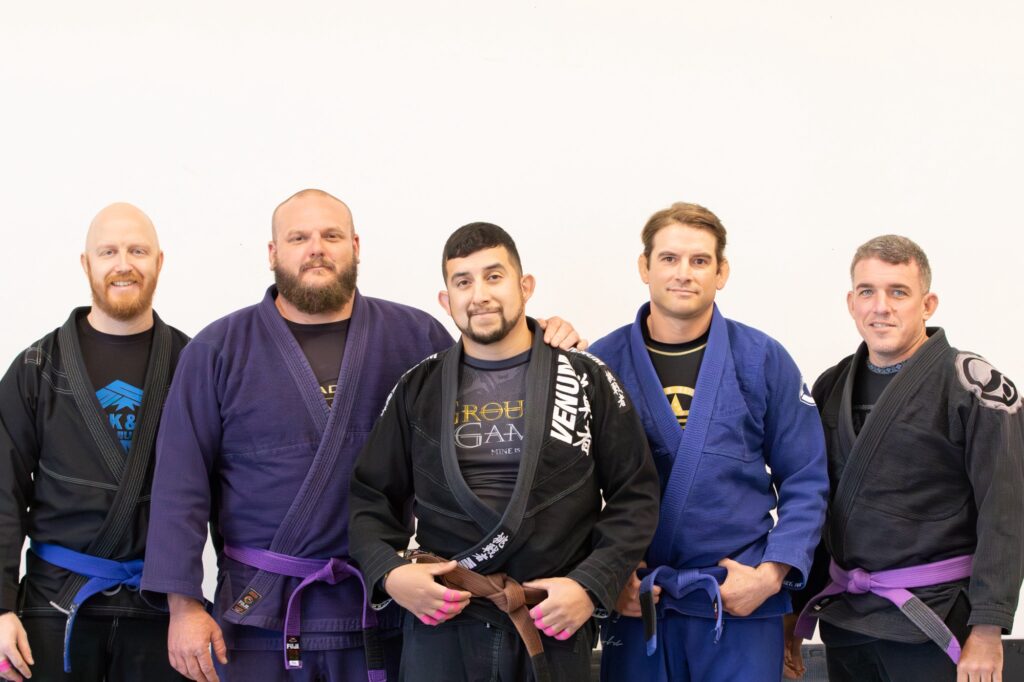
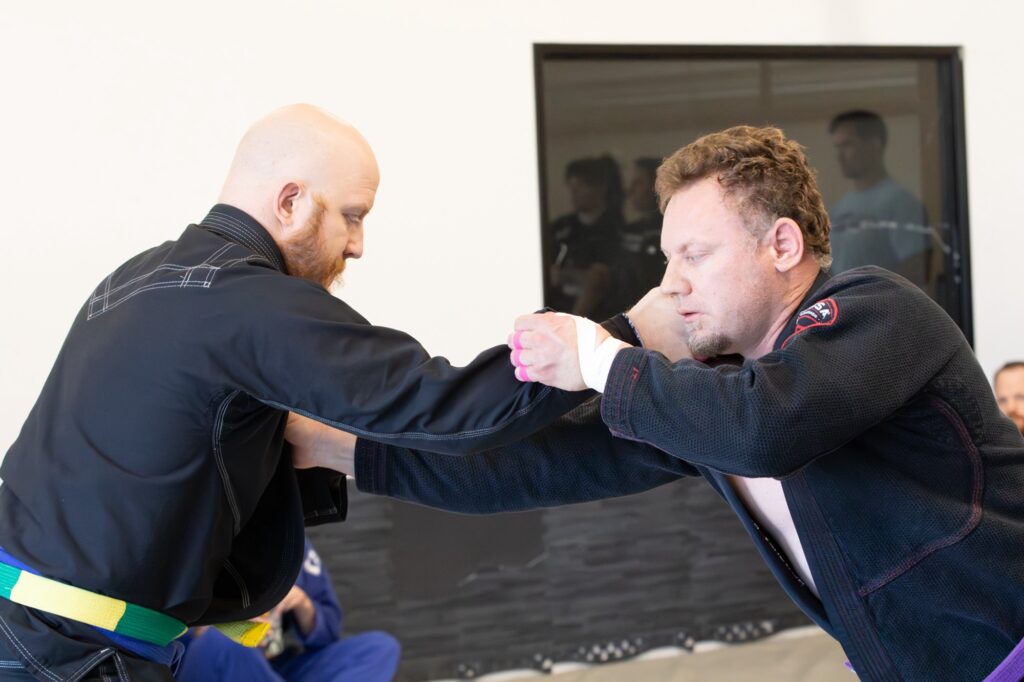
The hills came alive with the rustle of gis as the highly anticipated “Ruckus in the Hills” 5 vs. 5 adult dual meet in-house Jiu-Jitsu competition unfolded. This event, held at our local academy nestled in the picturesque hills, brought together skilled practitioners and enthusiastic spectators for a show of camaraderie, intense grappling, and spectacular displays of technique in El Dorado Hills, CA.

Setting the Scene

The atmosphere was electric from the moment participants and spectators began to gather. The youth competition had just concluded, and there was an atmosphere of elevated intensity as the adult competitors gathered and warmed up for their competition. The teams, comprised of five members each, were a blend of various belt levels, ensuring a diverse and challenging competition.

The Format

The dual meet format was a refreshing twist from typical tournament structures. Instead of individual brackets, teams faced off in head-to-head matches, with each bout contributing to the overall team score. This fostered a sense of unity and strategic planning, as teammates relied on each other not just for moral support, but for crucial points that would determine the evening’s champions.

Quick submission earned 5 team points and submissions after a length of time 4 team points. A win by pin, in side control, Mount, or north south for a length of time earned the team 3 points. Finally a win by points scored during the regulation time would earn 2 team points.

The Teams

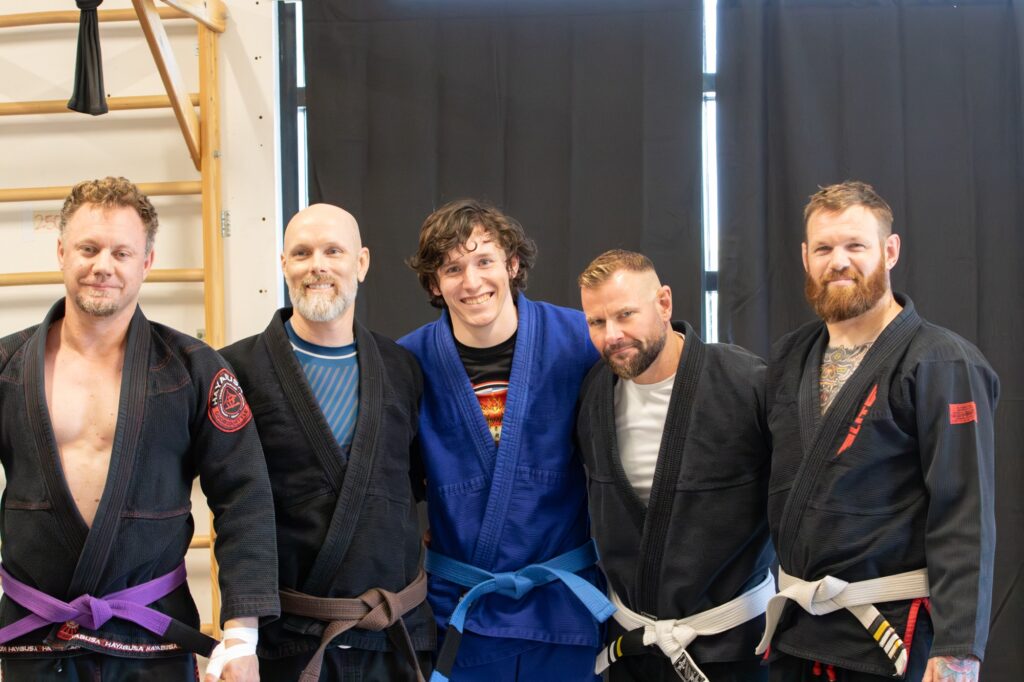
Two formidable teams, aptly named the “Mountain Warriors” and the “Hilltop Heroes,” took to the mats. Each team showcased a range of talents, from seasoned martial artists to determined white belts, all eager to prove their mettle. The team captains, both respected within our community, set the tone with their leadership and expertise, guiding their teams through strategy and tactical discussions.

The Matches

Each team submitted the order of competitors, without knowledge of the other teams order. While there was discrepancy in age, weight, and belt level, competition time and rules were adjusted to meet a level of competition standard for all to be competitive with.

As the matches began, it was exciting to see how different experiences matched up in competition. Each team was flanked by coaches Aaron and Allan, who looked to give both technical and strategic advice in the heat of the battle.

The Aftermath

With the final points tallied, the “Hilltop Heroes” emerged victorious by a narrow margin. However, in the spirit of Jiu-Jitsu, the true victory was the shared experience, the lessons learned, and the bonds strengthened within the community. Medals were awarded, but the real reward was the mutual respect and admiration each competitor earned.

“Ruckus in the Hills” was more than just a competition; it was a celebration of our Jiu-Jitsu community. It reinforced the importance of perseverance, teamwork, and sportsmanship. Whether competitor or spectator, everyone left with a sense of pride and a renewed passion for the gentle art.

We look forward to the next “Ruckus in the Hills,” where new challenges will be met with determination, continuing the tradition of excellence and camaraderie that defines our academy. Until then, we return to the mats, training harder, pushing our limits, and preparing for the next opportunity to showcase our skills.

2 competitors from EDH looking to make a splash at the Mundials (IBJJF World Championships)

The International Brazilian Jiu-Jitsu Federation (IBJJF) World Championships are being held in Long Beach, California this weekend. This premier event in the Brazilian Jiu-Jitsu (BJJ) calendar attracts top competitors from around the globe, showcasing elite grappling skills and techniques.

The tournament, often referred to simply as the Mundials or worlds in Portuguese, is a focal point for the BJJ community, providing a platform for both established champions and rising stars to compete for the prestigious title of world champion. Athletes compete across various weight divisions and belt levels, from blue to black belt, with black belt finals being the highlight of the event.

The Long Beach venue is known for its vibrant atmosphere, with passionate fans and practitioners gathering to witness the high-level competition. Matches are characterized by intense, strategic grappling, with competitors employing a range of techniques including guard passes, submissions, and sweeps.

The anticipation is high, with many storylines to follow, including reigning champions defending their titles and newcomers seeking to make their mark on the world stage.

Two competitors from El Dorado Hills Jiu Jitsu are competing in the event. Danny in the purple belt division and Ken in the blue belt division. They both participated in the tournament last year but fell short of the podium and are looking to use the year of training and competition experience to build upon and finish with a higher standing.

The Importance and Difficulty of Mastering Closed Guard in Brazilian Jiu-Jitsu | EDH BJJ

In Brazilian Jiu-Jitsu (BJJ), the closed guard is a fundamental and indispensable position that forms the core of many practitioners’ skill sets. This position, where the practitioner on the bottom wraps their legs around their opponent’s waist, serves as a powerful tool for control, defense, and offense. Its significance in BJJ cannot be overstated, as it provides a strong foundation for understanding the art’s mechanics and strategies. However, mastering the closed guard is no easy task. It requires a deep understanding of technical intricacies, adaptability to different opponents, physical conditioning, mental acuity, and a commitment to continuous learning. Despite these challenges, the closed guard remains a vital element of a successful BJJ game, offering both strategic depth and versatility.

Importance of Closed Guard

  1. Fundamental Position:
    The closed guard, also known as full guard, is one of the most fundamental and widely taught positions in Brazilian Jiu-Jitsu (BJJ). It forms the bedrock of many practitioners’ games, particularly for beginners. Mastering the closed guard offers a strong foundation for understanding more complex positions and transitions.
  2. Control and Defense:
    From the closed guard, a practitioner can effectively control their opponent, limiting their movement and offensive options. This position provides a defensive stronghold, preventing the opponent from passing guard and advancing to more dominant positions. The practitioner can use their legs and hips to keep the opponent close, reducing the risk of strikes in self-defense scenarios or MMA.
  3. Offensive Opportunities:
    The closed guard is rich with offensive possibilities. It allows for a wide range of submissions, such as arm bars, triangles, and omoplatas, as well as sweeps that can reverse the position. The versatility of the closed guard enables practitioners to launch attacks while maintaining a secure position.
  4. Energy Efficiency:
    Unlike some other positions that might require constant adjustment and high energy expenditure, the closed guard can be maintained with relatively low energy, allowing practitioners to conserve their stamina. This makes it a valuable position, particularly in long matches or when facing a more aggressive opponent.

Difficulty of Mastering Closed Guard

  1. Technical Complexity:
    While the closed guard might seem straightforward, mastering it requires a deep understanding of mechanics, leverage, and timing. Effective use of the guard involves precise control of the opponent’s posture and balance, which can take years to perfect. Each technique, from sweeps to submissions, requires intricate details and timing to execute correctly.
  2. Adaptability to Opponents:
    Different opponents will react differently to the closed guard, necessitating the ability to adapt dynamically. Practitioners must learn to anticipate and counter a variety of defensive maneuvers and guard passes. This adaptability only comes with extensive practice and experience against diverse training partners.
  3. Physical Demands:
    While the closed guard can be energy efficient, maintaining it and executing techniques effectively still demands significant core strength and flexibility. Developing the physical attributes needed to excel in the closed guard—such as hip mobility and leg dexterity—can be challenging and requires dedicated conditioning.
  4. Mental Focus:
    Effective use of the closed guard demands high levels of mental focus and strategic thinking. Practitioners must constantly monitor their opponent’s movements, anticipate attacks, and plan their own offensive and defensive actions. This mental aspect adds another layer of difficulty, as split-second decisions can mean the difference between maintaining control and losing the position.
  5. Continuous Evolution:
    The landscape of BJJ is ever-evolving, with new techniques and counters being developed continuously. Staying ahead in the closed guard game requires ongoing learning and adaptation. Practitioners must stay updated with the latest developments and incorporate them into their practice, which can be a lifelong endeavor.

In summary, the closed guard is a cornerstone of Brazilian Jiu-Jitsu that offers immense strategic value both defensively and offensively. However, mastering it is no small feat due to its technical complexity, the need for adaptability, physical demands, mental focus, and the continuous evolution of techniques. Despite these challenges, the rewards of a proficient closed guard make the effort worthwhile for any dedicated practitioner.

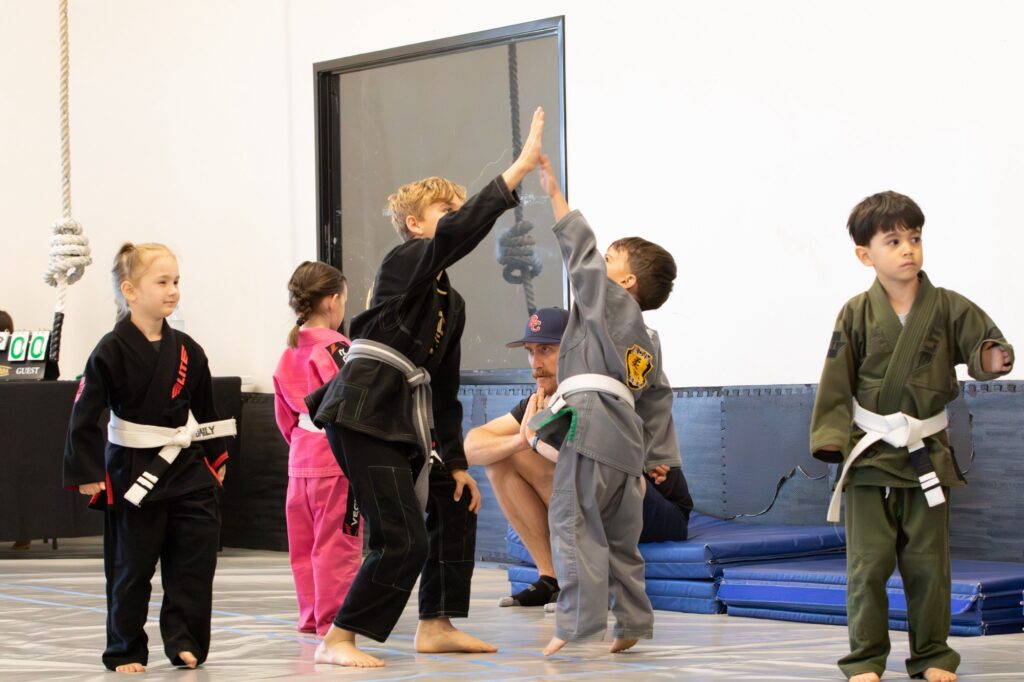
Come try jiujitsu with us at El Dorado Hills Jiu Jitsu. The academy that pioneered jiujitsu in the hills in 2009. EDHBJJ is a martial arts academy for the entire family. Send us an email or give us a call to get started with a trial lesson.

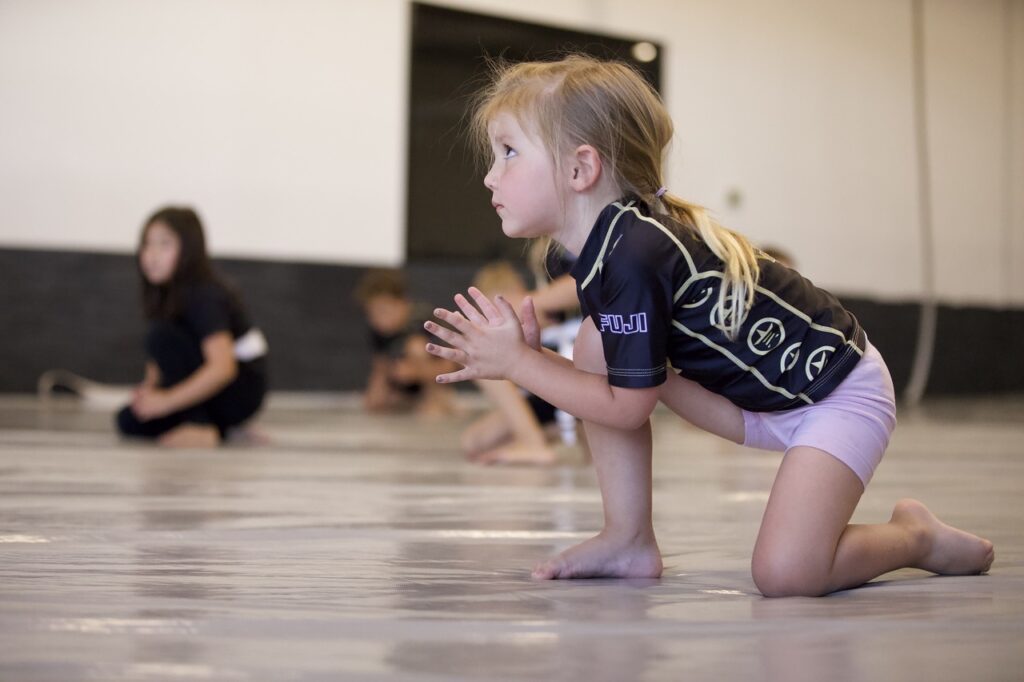
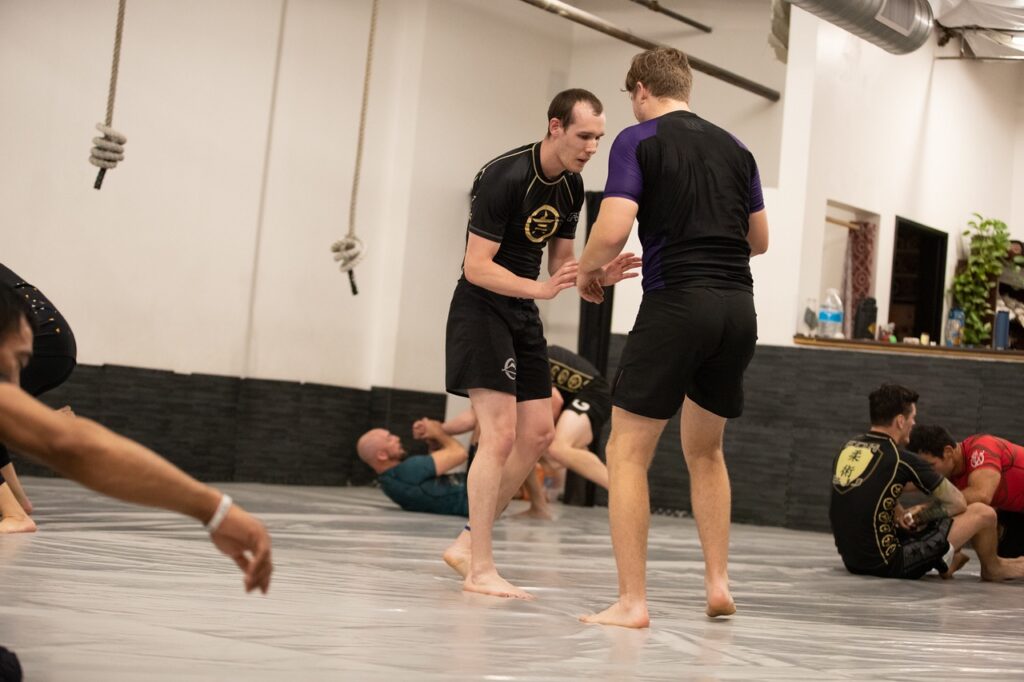
Youth classes transition to nogi at edhbjj

Transitioning from gi to no-gi Brazilian Jiu-Jitsu (BJJ) involves several adjustments in technique, strategy, and mindset due to the differences in attire and grips. Here are the key aspects of this transition:

Differences in Attire

  • Gi: The gi (kimono) includes a jacket, pants, and a belt, which provides numerous grip opportunities for both offensive and defensive techniques.
  • No-Gi: Practitioners wear a rash guard and shorts, eliminating the use of clothing for grips. Students can also wear gi pants for practice sessions. Please wear the gi belt for stripes and belt promotions during the summer session.

Technical Adjustments

  • Grips and Control: In gi, grips on the collar, sleeves, and pants are fundamental. No-gi requires more reliance on body grips, such as underhooks, overhooks, and wrist control, since there are no gi grips available.
  • Friction: No-gi tends to be faster-paced because the lack of friction from the gi and increased sweat make it harder to maintain control, leading to more scrambles and dynamic movement.
  • Submissions: Certain submissions and sweeps that rely heavily on gi grips, like collar chokes and spider guard sweeps, are not applicable in no-gi. Instead, practitioners focus more on techniques that don’t require cloth grips.

Strategic Adjustments

  • Speed and Athleticism: No-gi often demands higher levels of athleticism and speed due to the decreased friction and grip options, which results in faster transitions and more explosive movements.
  • Positioning and Pressure: Controlling positions in no-gi can be more challenging, necessitating tighter control and better body mechanics to prevent escapes.
  • Guard Playing: Guards like spider guard or lasso guard, which depend on gi grips, are replaced by guards like butterfly guard, half guard, and variations of the open guard that rely more on hooks and underhooks.

Mindset Shifts

  • Adaptability: Practitioners must adapt their game to the absence of gi grips, which often involves developing a different set of techniques and refining those that are gi-independent.
  • Defensive Awareness: Without the gi to slow down the pace, defensive awareness and reaction times need to be sharper to prevent submissions and positional losses.

Training and Drilling

  • Cross-Training: Many BJJ practitioners train both gi and no-gi to become well-rounded. This cross-training enhances their adaptability and overall grappling proficiency.
  • Specific Drills: Practicing specific drills that focus on no-gi grips, positional control, and transitions helps in developing the necessary skills for effective no-gi grappling.

The transition from gi to no-gi BJJ can be challenging but also rewarding, as it broadens a practitioner’s skill set and adaptability. By focusing on the unique aspects of no-gi grappling and continuously refining techniques, practitioners can smoothly transition and excel in both styles.

Takeaway lessons from Anthony Bourdain Kitchen Confidential and Brazilian Jiujitsu

Relating “Kitchen Confidential” to Brazilian Jiu-Jitsu (BJJ) reveals several intriguing parallels between the culinary world and martial arts:

  1. Intense Training and Dedication: Just as chefs in Bourdain’s book undergo rigorous, often grueling training to hone their skills, BJJ practitioners spend countless hours on the mat perfecting techniques. Both fields demand a high level of dedication, discipline, and perseverance to achieve mastery.
  2. Respect for Technique and Tradition: Bourdain emphasizes the importance of respecting culinary techniques and traditions, a sentiment echoed in BJJ where practitioners honor the martial art’s rich history and the precise execution of techniques.
  3. Hierarchy and Apprenticeship: Professional kitchens and BJJ gyms both have clear hierarchical structures. In kitchens, there are sous chefs, line cooks, and the head chef. In BJJ, there are belts that denote rank and experience. Both systems rely on apprenticeship and mentorship, where novices learn from seasoned experts.
  4. Camaraderie and Culture: The kitchen and the BJJ gym are both environments where strong bonds and a unique subculture develop among participants. The camaraderie, mutual respect, and shared experiences create a tight-knit community in both settings.
  5. Handling Pressure: Both chefs and BJJ practitioners operate under significant pressure. Chefs must deliver consistently high-quality dishes under tight deadlines, while BJJ athletes face the development of physical and mental stressors, competition, and intense training sessions.
  6. Continuous Learning: Bourdain’s narrative highlights that even experienced chefs are always learning and evolving. Similarly, in BJJ, there is a continuous pursuit of improvement and knowledge, as the art is dynamic and constantly evolving.
  7. Overcoming Adversity: Both chefs and BJJ practitioners encounter setbacks and challenges that test their resilience. Whether it’s a tough service in the kitchen or a difficult match on the mat, overcoming adversity is a common theme.
  8. Personal Growth and Passion: Bourdain’s passion for cooking mirrors the passion many have for BJJ. Both activities offer profound personal growth, teaching patience, humility, and the value of hard work.

By drawing these parallels, we see that the underlying principles of hard work, respect, community, and continuous improvement are central to both the culinary world described in “Kitchen Confidential” and the practice of Brazilian Jiu-Jitsu.

If you’re a jiujitsu practitioner and looking for a fun read this might be a great one to pick up. Give the book a try and give us your feedback, insights, thoughts!

Fostering a Growth Mindset Through Jiu-Jitsu: A Guide for Parents

In today’s fast-paced world, instilling a growth mindset in children is more crucial than ever. A growth mindset, the belief that abilities can be developed through dedication and hard work, stands in stark contrast to a fixed mindset, which views abilities as static and unchangeable. One effective way to nurture a growth mindset in children is through the practice of Brazilian Jiu-Jitsu (BJJ). This martial art not only teaches self-defense but also offers profound life lessons that extend beyond the mat. Here’s how parents can leverage BJJ to cultivate a growth mindset in their children.

  1. Embrace Challenges

Lesson from the Mat:
In BJJ, every sparring session presents new challenges. Whether it’s learning a new technique or facing a stronger opponent, the art encourages practitioners to confront and overcome obstacles.

Parental Guidance:
Encourage your child to view these challenges as opportunities for growth rather than threats. Celebrate their efforts in trying new moves, even if they don’t succeed initially. Remind them that mastery comes from repeated practice and learning from mistakes.

  1. Praise Effort, Not Just Results

Lesson from the Mat:
Progress in BJJ is often slow and incremental. It’s common for practitioners to struggle with a technique before finally mastering it.

Parental Guidance:
Focus on praising the effort your child puts into their training rather than the outcome. For instance, instead of saying, “You’re so good at that move,” say, “I’m proud of how hard you worked on that move.” This reinforces the idea that effort leads to improvement.

  1. Learn from Failure

Lesson from the Mat:
In BJJ, losing a match or getting submitted is not seen as failure but as a learning opportunity. Every mistake is a chance to refine techniques and strategies.

Parental Guidance:
Help your child analyze what went wrong and what they can do differently next time. Encourage them to ask their instructor or peers for tips and to view setbacks as a natural part of the learning process.

  1. Cultivate Resilience

Lesson from the Mat:
Resilience is a core component of BJJ. Practitioners often face physically and mentally demanding situations but learn to persist through discomfort and fatigue.

Parental Guidance:
Teach your child the importance of resilience by reinforcing that persistence through tough times builds strength and character. Share stories of well-known BJJ practitioners who faced significant challenges yet persevered.

  1. Encourage Curiosity and Experimentation

Lesson from the Mat:
BJJ is a dynamic and evolving martial art. Practitioners are encouraged to explore different techniques and adapt them to their style.

Parental Guidance:
Promote a curious mindset in your child. Encourage them to try new techniques and variations. Let them know it’s okay to experiment and make mistakes along the way, as this is a crucial part of learning and growth.

  1. Model a Growth Mindset

Lesson from the Mat:
Instructors and senior students in BJJ often model a growth mindset by continually seeking improvement and showing humility in their practice.

Parental Guidance:
Be a role model for your child by demonstrating a growth mindset in your own life. Share your experiences of learning from mistakes and persevering through challenges. Your attitude towards learning and growth will significantly influence your child’s mindset.

Brazilian Jiu-Jitsu offers a unique and effective way to teach children the principles of a growth mindset. By embracing challenges, praising effort, learning from failure, cultivating resilience, encouraging curiosity, and modeling a growth mindset, parents can help their children develop the mental toughness and perseverance needed for success in both martial arts and life. So, throw on that gi, step onto the mat, and embark on this rewarding journey with your child.

Embracing the Role of a Supportive Parent in the World of Jiujitsu

As a parent, one of the most fulfilling experiences is watching your child discover and pursue their passions. When your child chooses to dive into the world of jiujitsu, it can open up a new and exciting chapter for both of you. Even if you don’t train jiujitsu yourself, there are numerous ways you can be a supportive and encouraging parent.

Understanding Jiujitsu: A Primer for Non-Practitioners

Jiujitsu, often referred to as Brazilian Jiu-Jitsu (BJJ), is a martial art focusing on ground fighting and submission holds. It’s not just a physical discipline but also a mental game that emphasizes strategy, patience, and resilience. As a parent, learning the basics about jiujitsu can help you appreciate the intricacies of the sport and the skills your child is developing.

Becoming a Proactive Supporter

  1. Attend Classes and Competitions: Showing up matters. Whether it’s a regular class, a local competition, or a major tournament, your presence can be incredibly motivating for your child. Cheer them on, celebrate their victories, and support them through losses.
  2. Learn the Language: Familiarize yourself with common terms and concepts in jiujitsu. Knowing the difference between a guard and a mount, or understanding what a “tap” means, can make conversations with your child more engaging and meaningful.
  3. Encourage Patience and Discipline: Jiujitsu requires regular practice and a lot of discipline. Encourage your child to stay committed to their training schedule, and help them balance jiujitsu with their other responsibilities, like school and chores.
  4. Check in & communicate with the coach: Don’t hesitate to check in with a coach about how you can help with their development. Our coaches at edh jiujitsu love involved parents and are happy to answer questions or give feedback. If you’re motivated to join us on the mat as a coach during class you’re always welcome![

Emotional and Mental Support

  1. Foster a Growth Mindset: Jiujitsu, like any sport, comes with its ups and downs. Help your child develop a growth mindset by emphasizing effort over results. Praise their hard work and resilience, and help them see losses as learning opportunities.
  2. Manage Stress and Pressure: Competitions can be stressful. Teach your child techniques to manage anxiety, such as deep breathing, visualization, or positive self-talk. Remind them that their worth isn’t defined by their results on the mat.
  3. Celebrate Small Victories: Recognize and celebrate milestones, no matter how small. Whether it’s mastering a new technique, earning a stripe on their belt, or showing good sportsmanship, acknowledging these moments can boost their confidence and motivation.

Creating a Supportive Environment

  1. Build a Network: Connect with other parents in the jiujitsu community. Sharing experiences, challenges, and tips can provide valuable support and camaraderie.
  2. Promote Balance: While jiujitsu is important, ensure it doesn’t overshadow other aspects of your child’s life. Encourage them to pursue other interests and maintain a healthy balance between jiujitsu, academics, and social activities.
  3. Set Realistic Goals: Help your child set achievable goals in their jiujitsu journey. Whether it’s progressing to the next belt level or refining a specific technique, setting and achieving goals can provide a sense of accomplishment and direction.

Being a supportive parent in the world of jiujitsu doesn’t require you to be an expert in the sport or a martial artist. Your role is to encourage, support, and guide your child as they navigate their jiujitsu journey. By being present, understanding their experiences, and fostering a positive and balanced environment, you can help your child thrive both on and off the mat. Embrace the journey together, and watch as your child grows in confidence, skill, and character through the art of jiujitsu.

Mastering Tomoe Nage: The Art of the Circular Throw in Judo

In the world of Judo, where the principles of leverage, balance, and timing converge, tomoe nage stands out as a visually striking and effective throw. This technique, often referred to as the “circular throw,” exemplifies the core philosophies of Judo, emphasizing the use of an opponent’s momentum and balance against them.

The Origins and Essence of Tomoe Nage

Tomoe nage, which translates to “stomach throw” or “circle throw,” is one of the original 40 throws developed by Judo’s founder, Jigoro Kano. It is classified under the Ma-sutemi-waza (front sacrifice throws) in Judo, meaning the thrower sacrifices their standing position to execute the technique.

The essence of tomoe nage lies in its simplicity and efficiency. By leveraging the principles of balance and momentum, a judoka (practitioner of Judo) can effortlessly throw an opponent over their head, regardless of the opponent’s size or strength. This is achieved by executing a swift, circular motion that disrupts the opponent’s balance, making them vulnerable to the throw.

Breaking Down the Technique

To execute tomoe nage, a judoka needs to adhere to a series of precise movements:

  1. Grip and Approach: Begin by gripping the opponent’s collar with one hand and their sleeve with the other. This standard grip ensures control over the opponent’s upper body.
  2. Breaking Balance (Kuzushi): Pull the opponent forward and downward while simultaneously stepping one foot onto their lower abdomen. This action is crucial as it breaks the opponent’s balance, setting up the throw.
  3. Entry (Tsukuri): Drop your body to the mat, ensuring your back is almost parallel to the ground. The leg placed on the opponent’s stomach should be bent at the knee, acting as a lever.
  4. Execution (Kake): Extend the leg on the opponent’s stomach and pull with your arms, guiding the opponent over your head in a circular arc. The combination of leg extension and pulling motion generates the necessary force to complete the throw.
  5. Follow Through: As the opponent is airborne, maintain control and guide their descent to ensure a clean throw and minimize the risk of injury.

Training Tips for Tomoe Nage

Mastering tomoe nage requires practice and an understanding of timing and body mechanics. Here are some tips to enhance your execution:

  • Partner Drills: Work with a partner to practice breaking their balance and executing the entry smoothly. Focus on the fluidity of your movements.
  • Controlled Environment: Use crash mats to safely practice the throw, especially when learning to gauge the force and speed required.
  • Core Strength: Develop core muscles, as they play a vital role in generating the power needed for the throw. Exercises like sit-ups, leg raises, and planks are beneficial.
  • Video Analysis: Record your practice sessions to analyze your technique. Compare your form with experienced judokas and identify areas for improvement.

Practical Applications

Beyond the dojo, tomoe nage has practical applications in self-defense scenarios. Its ability to neutralize larger opponents makes it a valuable technique in real-life confrontations. Moreover, it is a testament to Judo’s philosophy of using an opponent’s strength to one’s advantage, highlighting the martial art’s efficiency and elegance.

Tomoe nage is more than just a throw; it is a manifestation of Judo’s core principles. By mastering this technique, judokas can enhance their repertoire, gain a deeper understanding of balance and leverage, and appreciate the art of Judo in its purest form. Whether you are a beginner or an experienced practitioner, the journey to perfecting tomoe nage is a rewarding pursuit that embodies the spirit of Judo.